
 By ABDULLAH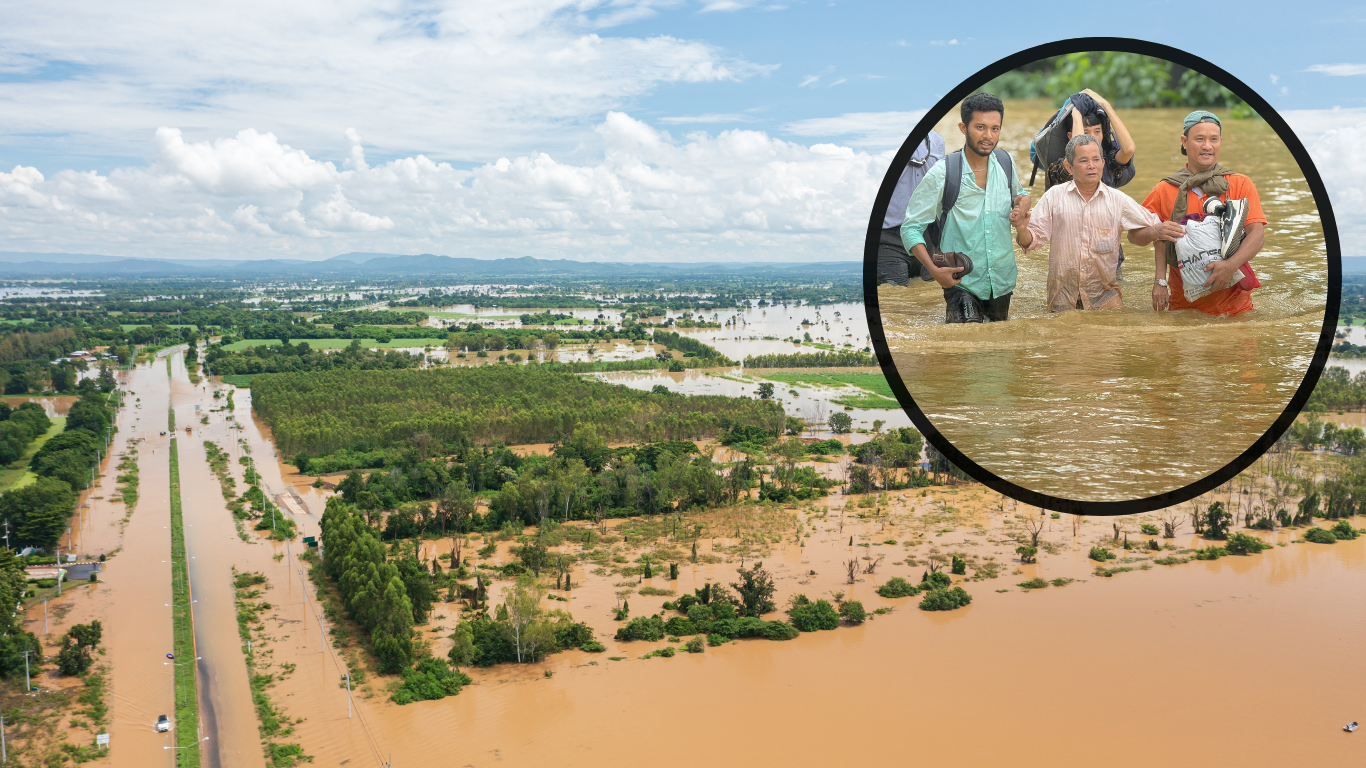
Punjab is once again facing the brunt of severe flooding, with thousands of families displaced and entire villages submerged. According to the latest report from the Provincial Disaster Management Authority (PDMA), Sialkot, Narowal, and Jhang have emerged as the worst-hit districts as rivers overflow and heavy rains continue.
Sialkot has suffered the heaviest damage so far, with 1,069 villages (Mauzas), including parts of the city, inundated by floods and rainstorms. The PDMA estimates that 1.77 million people in the district have been affected, with at least 24 confirmed deaths. Thousands have been forced to leave their homes, while crops and livestock remain at risk.
For local communities already struggling with inflation and unemployment, the flooding has added another layer of hardship. Social media from Sialkot shows heartbreaking scenes of families wading through water with their belongings stacked on their heads, desperate for shelter.
Narowal is the second-worst-hit district, where 908 villages are under water. Around 180,000 people have been directly affected, while four people have tragically lost their lives. Relief workers say that many of the displaced are taking shelter in makeshift camps, while others are relying on relatives in safer areas.
In Jhang, floodwaters have entered 313 Mauzas, displacing hundreds of families. Thankfully, no casualties have been reported so far. However, the damage to standing crops, homes, and rural roads is extensive, raising concerns about food shortages and economic losses in the coming weeks.
The flood impact is not limited to these three districts. Many other parts of Punjab, including Gujrat (214 villages), Mandi Bahauddin (78), Hafizabad (165), Multan (138), and Bahawalnagar (143), have also been severely affected. In Gujrat, four deaths have already been reported.
Smaller but significant damages have also been recorded in Sheikhupura, Lahore, Nankana Sahib, Kasur, Okara, Faisalabad, Khanewal, Muzaffargarh, and Bahawalpur, showing that almost the entire province has felt the effects of these floods.
According to PDMA data, 4,744 villages across Punjab have been impacted by the overflowing rivers. The Chenab, Ravi, Sutlej, and Indus rivers have caused widespread destruction, displacing more than 4.57 million people. So far, at least 101 deaths have been reported across the province.
Adding to the tragedy, over 2.5 million people have been evacuated, while more than 2 million animals have been shifted to safer ground. For many farmers, livestock is their only source of livelihood, making this evacuation critical.
The Punjab government has set up 392 relief camps, currently housing over 81,000 displaced people. Medical teams are also on the ground, with 493 medical camps having treated nearly 384,000 people so far. At the same time, 422 veterinary camps are operational to provide emergency care to livestock.
The authorities are urging people in low-lying areas to move to safer ground, while rescue teams supported by the army and local volunteers are working day and night. However, many locals complain that aid is slow to arrive and that food supplies in the relief camps are limited.
In Narowal, residents expressed frustration that embankments were not strengthened before the rains. A farmer told local reporters, “We had already lost our wheat crop this year. Now our rice fields are under water. If the government does not compensate us, how will we survive?”
In Jhang, where no deaths have been reported yet, villagers remain cautious. “The water is still rising. We don’t know if our houses will survive the next wave,” said one resident.
Pakistan has faced deadly floods almost every year, but the scale this year shows the urgent need for long-term planning. Experts say unchecked construction along riverbanks, poor drainage, and lack of flood-control infrastructure have worsened the crisis.
For millions across Punjab, life is now a fight for survival. With roads cut off and power outages in many rural areas, ordinary people are relying on community networks, charity groups, and local mosques to get by.
As Punjab continues to battle devastating floods, Sialkot, Narowal, and Jhang stand at the epicenter of destruction. The human and economic cost is staggering, and recovery will take months, if not years. What remains clear is that without stronger disaster management policies and climate resilience planning, such tragedies will keep repeating year after year.