
 By ABDULLAH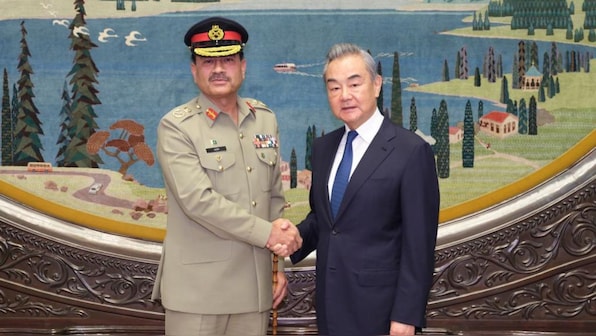
In a surprising diplomatic maneuver that has caught the attention of both India and the United States, Pakistan’s Army Chief — now Field Marshal General Asim Munir — abruptly canceled his scheduled visits to Sri Lanka and Indonesia, instead flying to Beijing for a high-level meeting with Chinese leadership. The timing, diplomatic weight, and symbolic overtures surrounding this visit mark a significant pivot in Pakistan’s strategic posture — one deeply embedded in China’s growing regional ambitions and Islamabad’s evolving defense dependencies.
This is Munir’s first visit to China since assuming the title of Field Marshal, and it comes on the heels of India’s Operation Sindoor, launched in May 2025 in response to the Pahalgam terror attack. The operation, which triggered four days of intense clashes, saw Pakistan deploy advanced weaponry supplied by China, a point of concern for Indian and Western defense analysts alike.
Munir’s visit appears to be a calculated move, aiming to reinforce bilateral cooperation in the wake of these tensions while projecting Pakistan’s unwavering commitment to China–Pakistan Economic Corridor (CPEC) security and broader counterterrorism collaboration.
During his stay in Beijing, Gen. Munir met with:
- Chinese Vice President Han Zheng
- Foreign Minister Wang Yi
- General Zhang Youxia, Vice Chairman of China’s Central Military Commission
These meetings reaffirmed the “iron-clad” friendship between the two nations. Wang Yi highlighted the depth of the China–Pakistan military partnership, stressing that Pakistan remains a top priority in China’s neighborhood diplomacy.
Vice President Han lauded Pakistan as a “strategic cooperative partner”, emphasizing the shared commitment to regional peace and multilateralism. He echoed President Xi Jinping’s call for building a China–Pakistan community with a shared future.
China’s primary concern remains the safety of its nationals and institutions working in Pakistan — particularly amid recent attacks by groups like the Balochistan Liberation Army, which has frequently targeted Chinese personnel working on CPEC projects.
Munir responded with a firm commitment:
“The Pakistani military will take all necessary measures to safeguard Chinese citizens, enterprises, and infrastructure.”
This pledge aligns with China’s call for enhanced counter-terrorism cooperation, especially in volatile regions of Balochistan and Khyber Pakhtunkhwa.
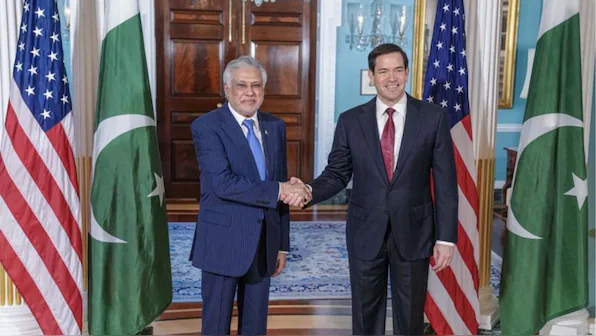
Interestingly, Munir’s China visit coincided with Pakistan’s Deputy Prime Minister and Foreign Minister Ishaq Dar’s trip to Washington, where he is set to meet U.S. Secretary of State Marco Rubio. This dual-track diplomacy suggests a balancing act by Pakistan — nurturing ties with both the West and China, even as these two powers engage in a global strategic rivalry.
This strategic shuffle is seen as a synchronized outreach by Islamabad, reflecting its dependence on Beijing for defense and economic support, while also keeping communication lines open with Washington.
China’s top military leadership expressed full confidence in the Pakistan Armed Forces, describing them as the cornerstone of regional stability. General Zhang Youxia commended Munir on his elevation and emphasized:
“Military-to-military relations between China and Pakistan are a key pillar of our partnership. We will continue to expand strategic communication and practical cooperation.”
India is closely monitoring this sudden trip. Analysts suggest that the visit sends a message not only to New Delhi but also to Washington — reinforcing China’s growing sphere of influence in South Asia. It also underlines the deepening military ties between Pakistan and China, a dynamic that India views with increasing concern, especially given the recent operational cooperation displayed during the May clashes.
While today’s headlines are dominated by drones and ballistic missiles, the roots of Pakistan-China defense cooperation trace back to the Cold War era — symbolized by early aircraft like the Hawker Hunter and Chinese Shenyang jets. Though the Hawker Hunter is no longer active in combat, it serves as a historic reminder of Pakistan’s evolving air defense strategy and enduring alliances.
The modern-day equivalent is the JF-17 Thunder, co-produced by Pakistan and China, signifying how far the two nations have come — from importing to co-developing strategic assets.
Gen. Asim Munir’s sudden pivot to China marks more than a diplomatic detour — it’s a strategic chess move signaling Pakistan’s deeper alignment with Beijing amid rising regional instability and global polarization.
Whether it leads to stronger defense mechanisms or stirs greater geopolitical friction remains to be seen. What’s clear, however, is that China and Pakistan are doubling down on their all-weather partnership, and the world — particularly India and the U.S. — is watching closely.