
 By ABDULLAH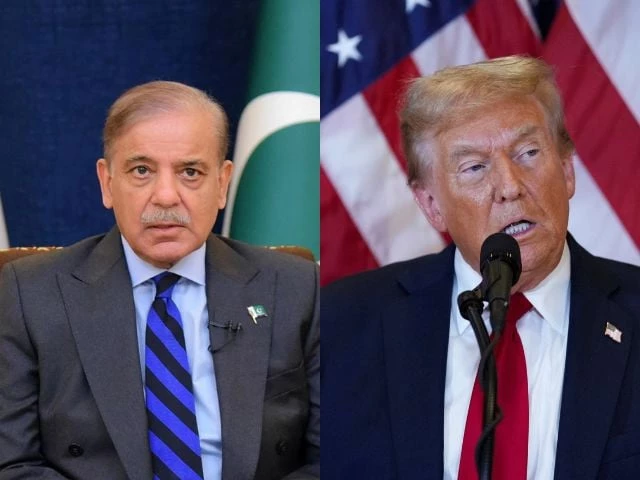
WASHINGTON/ISLAMABAD — In a high-stakes geopolitical shift, the United States and Pakistan have finalized a breakthrough trade and energy partnership that will see both nations jointly develop Pakistan’s vast oil reserves, US President Donald Trump announced on July 31, 2025.
The deal arrives just hours after Trump revealed a sweeping 25% tariff on Indian imports and threatened secondary penalties over New Delhi’s continued trade with Russia. This twin-track policy signals Washington’s evolving approach to South Asian diplomacy, with Islamabad emerging as a new economic ally and India facing rising scrutiny.
Posting on his Truth Social platform, President Trump declared:
“We have just concluded a deal with the country of Pakistan, whereby Pakistan and the United States will work together on developing their massive oil reserves. We are in the process of choosing the oil company that will lead this partnership. Who knows, maybe they’ll be selling oil to India someday!”
While exact figures and contractual terms remain undisclosed, the announcement is being hailed in Islamabad as a “win-win.” Finance Minister Muhammad Aurangzeb, who led the final round of trade talks in Washington, called the agreement a “strategic breakthrough beyond immediate trade imperatives,” emphasizing broader cooperation in energy, IT, mining, and even cryptocurrency sectors.
Pakistan’s Finance Ministry confirmed the deal includes reduced tariffs on Pakistani exports to the US, potentially avoiding the 29% baseline rate previously floated in April. Though Washington has yet to formally announce the tariff terms, the deal reportedly aligns with the 15–20% range offered to countries like Vietnam, Japan, and the Philippines.
Final-stage negotiations were led by Finance Minister Aurangzeb and Foreign Minister Ishaq Dar, who said Pakistan aimed for a mutually beneficial agreement within days of the August 1 deadline. Dar, speaking at the Atlantic Council in Washington, noted:
“As long as we are better than or equal to our peers, we should be fine.”
The timing was critical. Pakistan is working to close its $3 billion trade deficit with the US and sought relief through increased imports of American goods—particularly energy—rather than facing higher tariffs.
In sharp contrast, India was slapped with a 25% tariff on all exports to the US, effective August 1, due to its trade practices and ongoing purchases of Russian military equipment and oil.
“India will be paying a tariff of 25%, plus a penalty… starting on August 1,” Trump posted.
“They have the most strenuous and obnoxious non-monetary trade barriers of any country.”
He further criticized New Delhi for being Russia’s largest buyer of energy during the Ukraine conflict, even as Western nations push Moscow to halt its war efforts.
Though India’s Ministry of Trade responded diplomatically, stating that talks on a “fair, balanced, and mutually beneficial” agreement are ongoing, the tariffs have already shaken markets. The Indian rupee dropped 0.4% and Gift Nifty futures declined by 0.6%, signaling economic uncertainty.
Adding to India’s troubles, the US State Department sanctioned six Indian companies for importing Iranian petrochemicals—an action in violation of current US restrictions. These include:
- Alchemical Solutions – over $84 million
- Global Industrial – over $51 million
- Jupiter Dye Chem – over $49 million
- Ramniklal – over $22 million
- Kanchan Polymers – $1.3 million
- Persistent Petrochem – approx. $14 million
Additional sanctions also targeted China- and UAE-based firms, as well as multiple tankers transporting Iranian oil.
This dual development signals a strategic realignment in Washington’s South Asia policy. While India remains a key regional partner, the oil deal and softened trade terms with Pakistan may reflect the US desire to counterbalance China’s growing influence in Islamabad, while penalizing India for its resistance to Western-led sanctions on Moscow and Tehran.
Pakistan, recently designated a “major non-NATO ally”, may benefit from expanded energy, IT, and mineral trade access—positioning itself as a viable counterweight to India in regional trade calculus.
President Trump has confirmed that no deadline extensions will be granted beyond August 1 for other trade negotiations. Talks with South Korea and China remain in progress, with the White House hinting at additional bilateral deals in energy and manufacturing.
The Pakistan-US oil deal, if executed successfully, could redefine Islamabad’s economic trajectory and usher in a wave of American investment in its underdeveloped energy sector.
At the same time, India faces mounting pressure to recalibrate its energy sourcing and trade practices or risk further isolation from key Western markets.