
 By ABDULLAH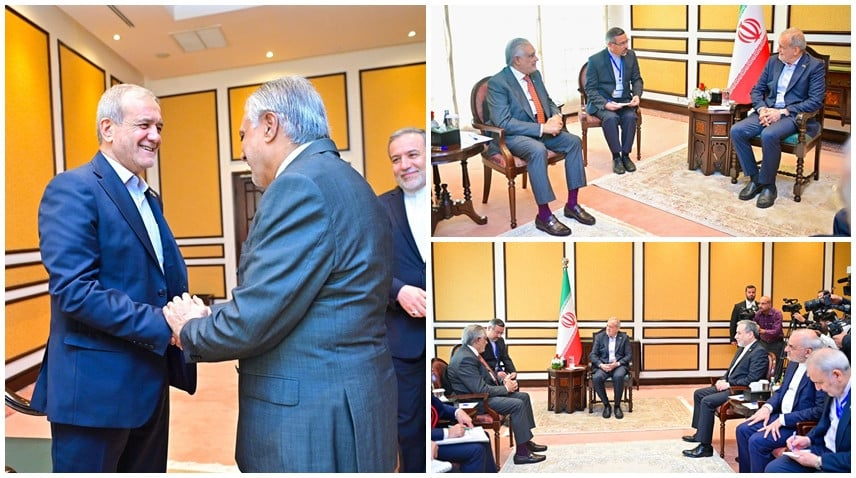
In a major stride toward deepening bilateral ties, Pakistan and Iran have agreed to set an ambitious $8 billion annual trade target, marking a renewed chapter in economic, defense, and regional cooperation. The announcement came as part of a high-profile diplomatic engagement between the two neighboring countries, coinciding with Iranian President Dr. Masoud Pezeshkian’s two-day state visit to Pakistan.
The trade agreement was formalized during a meeting in Islamabad between Pakistan’s Federal Minister for Commerce Jam Kamal Khan and Iran’s Minister for Industry, Mine and Trade Mohammad Atabak. Both sides acknowledged that despite their geographical proximity, trade volumes remained underwhelming and emphasized the urgent need to convert location into economic advantage.
“The time has come to accelerate trade ties with Iran,” said Commerce Minister Jam Kamal. “Our shared borders must become a corridor of mutual prosperity.”
The two countries agreed to fast-track the Pakistan-Iran Joint Economic Commission, a platform critical to operationalizing new agreements in sectors such as agriculture, energy, logistics, livestock, and IT services.
The meeting also emphasized enhancing border infrastructure and promoting people-to-people and business-to-business (B2B) contacts. Officials announced a new round of B2B engagements to promote trust between traders and improve trade corridor efficiency.
A significant portion of the talks focused on smuggling control, particularly of Iranian petroleum products. Pakistan has recently implemented strict anti-smuggling measures, which reportedly boosted legal trade by up to 340%. However, concerns remain over the resurgence of illegal activities, prompting both nations to agree on better border management systems.
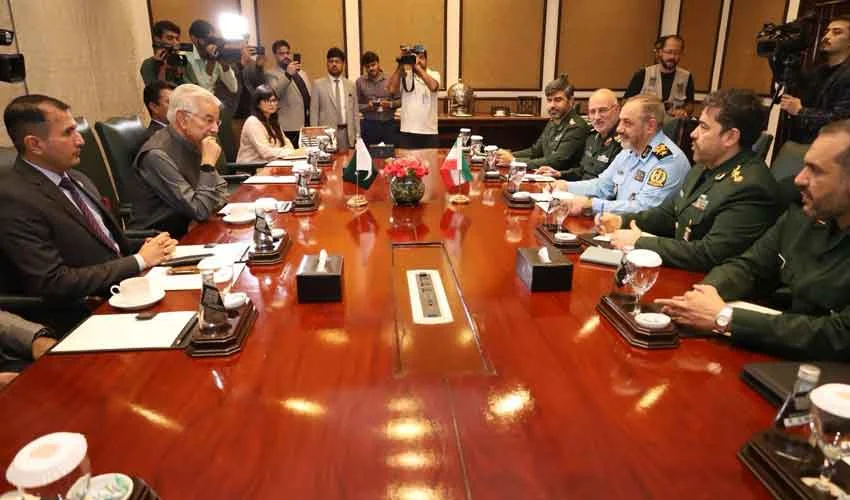
Parallel to trade talks, defense diplomacy also took center stage. Iranian Defence Minister Brig. Gen. Aziz Nasir-Zadeh met with his Pakistani counterpart Khawaja Muhammad Asif to discuss regional security, counterterrorism cooperation, and defense industry collaboration.
The defense ministers expressed optimism about enhancing military-to-military dialogue and agreed to continue joint security consultations aimed at preserving peace along the often-tense Pakistan-Iran border.
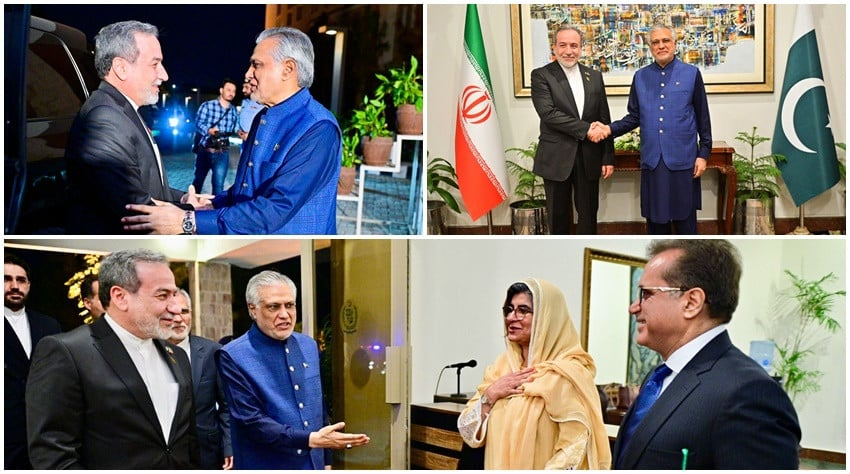
President Masoud Pezeshkian, on his first official trip to Pakistan, was warmly received by Prime Minister Shehbaz Sharif, President Asif Ali Zardari, and senior ministers at Nur Khan Airbase. The Iranian head of state is accompanied by a high-level delegation, including Foreign Minister Abbas Araghchi, who also held bilateral talks with Pakistan’s Foreign Minister Ishaq Dar.
In meetings with top Pakistani leadership, the two sides expressed their mutual interest in expanding trade up to $10 billion and discussed Iran’s possible inclusion in China’s Belt and Road Initiative (BRI) through Pakistan—potentially opening economic corridors from China to Europe via Iran.
During a symbolic stop in Lahore, President Pezeshkian visited the mausoleum of Allama Iqbal, Pakistan’s national poet who also has a revered status in Iran. The visit underscored the cultural and historical connections between the two nations, grounded in shared language, religion, and philosophy.
Federal Minister Abdul Aleem Khan, during meetings with Iranian officials, praised Iran’s stance in regional geopolitics and called the current period a “golden opportunity” for enhancing cooperation. He also acknowledged Iran’s bold position during the recent Israel-Iran conflict, calling it a source of pride for the Islamic world.
The commitment to an $8 billion trade target, improved security coordination, and infrastructure development represents a multi-dimensional upgrade in Pakistan-Iran relations. With mutual interest in regional connectivity, economic resilience, and political stability, the two nations are poised to shape a stronger, more collaborative future.
As talks continue, observers are watching closely to see whether this ambitious roadmap will translate into tangible progress for two historically linked yet economically underutilized neighbors.