
 By ABDULLAH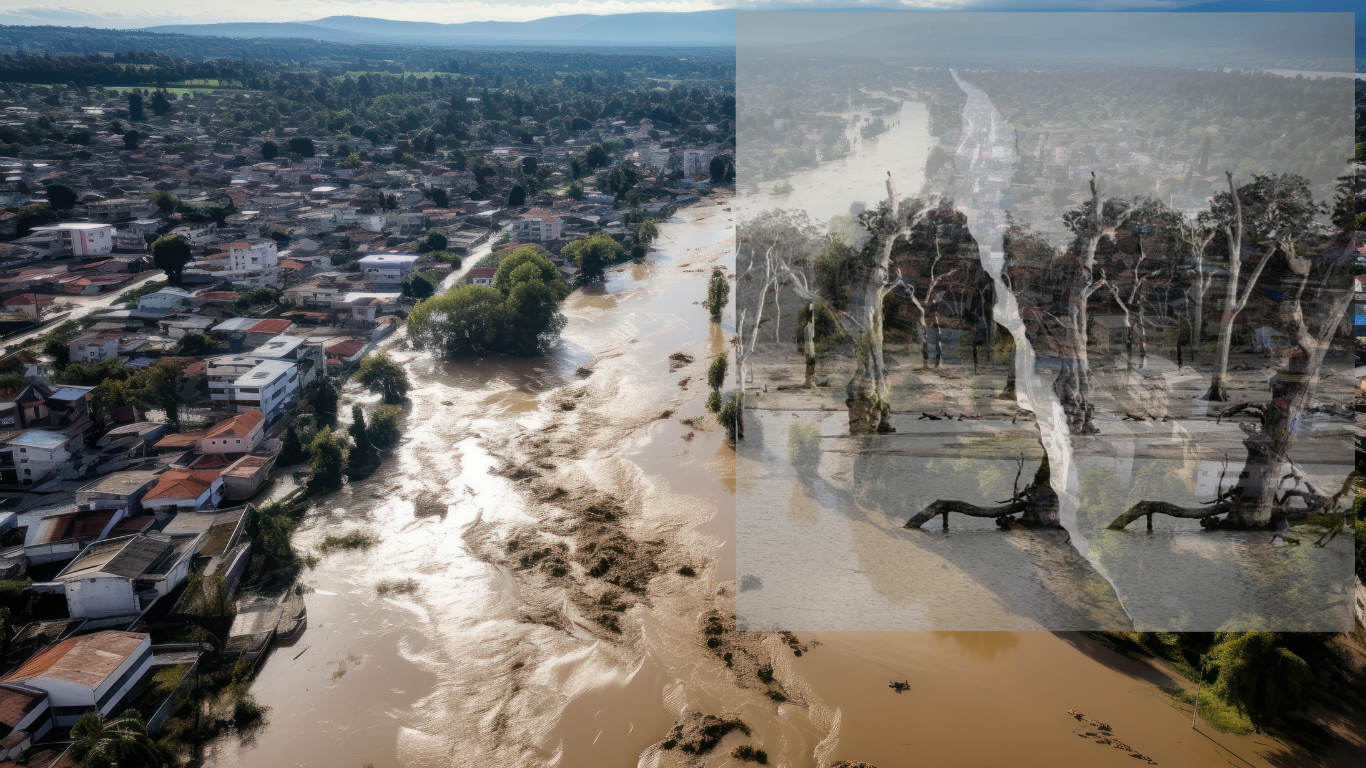
Punjab, both in Pakistan and India, is battling one of the deadliest floods in decades. With torrential monsoon rains breaking records and the Ravi, Sutlej, and Chenab rivers overflowing, the region is facing what authorities are calling a “super flood.” More than 28 people have died, and over 1.4 million people are affected across thousands of villages. Authorities have been forced to breach river dykes to save entire cities like Kasur and Jhang, highlighting the severity of this disaster.
According to the Provincial Disaster Management Authority (PDMA), water flows in the Ravi at Shahdara surged beyond 220,000 cusecs, the highest since 1988. Similarly, the Sutlej near Kasur crossed 200,000 cusecs, making it the river’s most dangerous flood level since 1955.
Authorities carried out controlled breaches at Rawaz Bridge and other protective embankments to divert waters and prevent massive urban destruction. Despite these measures, floods inundated parts of Lahore, Kasur, Sialkot, and Multan.
A local woman in Shahdara told reporters: “The water left nothing. Our crops, our homes, even clothes for our children have been destroyed.”
The scale of human suffering is massive.
- 1.45 million people affected across 1,769 villages.
- 429,000 people evacuated, according to PDMA.
- 300,000 livestock relocated, as Punjab is Pakistan’s breadbasket.
- Hundreds of families are now sheltering in 365 relief camps set up across Punjab.
In Sialkot’s Kamanwala village, 24-year-old Iman Salim said: “The whole house has drowned. We had no food, no water, no electricity for three days. Everything is gone.”
These stories echo the harsh reality of climate change in South Asia: people who contribute least to global emissions are paying the heaviest price.
This year’s floods highlight how fragile the Indus Water Treaty system remains. Floods in Pakistan’s Punjab are directly linked to heavy rains and dam releases from India’s Punjab and Himachal Pradesh.
On both sides of the border:
- Sutlej floods have submerged Kartarpur Sahib (Pakistan) and low-lying villages near Ludhiana (India).
- Ravi floods threaten Lahore (Pakistan) and Gurdaspur (India).
- Chenab floods are affecting both Jhang (Pakistan) and Pathankot (India).
This makes Punjab’s floods a regional crisis, not just a national disaster.
Experts blame a mix of natural and human-driven causes:
- Record-breaking Monsoon Rains – Pakistan Meteorological Department confirmed rainfall at a 49-year high.
- Climate Change – Erratic rainfall and melting Himalayan glaciers are intensifying monsoons.
- Poor Drainage & Urban Planning – Cities like Sialkot and Lahore suffer from blocked sewage systems, worsening urban flooding.
- Cross-border Dam Releases – Water released from Indian dams overwhelmed already flooded Pakistani rivers.
Punjab Chief Minister Maryam Nawaz Sharif announced emergency measures in hospitals to prevent outbreaks of cholera, hepatitis, and malaria. Prime Minister Shehbaz Sharif has called an emergency meeting to formulate a long-term water management and climate adaptation strategy, including building new reservoirs across provinces.
“Climate change is a reality. Pakistan must prepare for it with resilience, unity, and infrastructure development,” the Prime Minister said in a statement.
Punjab produces more than 70% of Pakistan’s wheat, rice, and sugarcane. The floods have destroyed standing crops, leaving farmers devastated. With inflation already soaring, food security is now at risk.
Analysts warn that the damage could cost billions of rupees, worsening Pakistan’s fragile economy.
On Twitter/X, hashtags like #PunjabFloods2025, #PrayForPunjab, and #ClimateCrisis are trending. Many Pakistanis are criticizing local governments for failing to maintain drainage systems. Others are volunteering with NGOs like Edhi Foundation, Sahara Foundation, and Sherzan, delivering food and medicines to stranded families.
A viral TikTok clip shows villagers in Kasur standing on rooftops waving for rescue helicopters. Another video from Sialkot highlights children swimming in sewage-mixed floodwater, raising fears of disease outbreaks.
Q1: What are the worst-affected districts in Punjab floods 2025?
Kasur, Lahore (Shahdara), Sialkot, Gujranwala, Jhang, and Multan are among the hardest hit.
Q2: How many people have been displaced?
Official figures confirm over 1.45 million affected, with more than 429,000 evacuated.
Q3: Is Punjab facing a flood like in 1993 or 2010?
Yes, experts say this is the worst since 1988–1993 levels, with water discharge at Shahdara and Sutlej close to record-breaking levels.
Q4: How is India linked to Punjab floods in Pakistan?
Water releases from Indian dams on Ravi, Sutlej, and Chenab contributed to Pakistan’s downstream flooding. Both Punjabs (India & Pakistan) face similar risks.
Q5: What long-term solutions are being proposed?
New reservoirs, improved flood forecasting, embankment strengthening, and international cooperation under climate adaptation plans.
The Punjab floods of 2025 are not just a natural disaster they are a stark reminder of how climate change, mismanagement, and cross-border water politics are shaping South Asia’s future. With lives lost, crops destroyed, and millions displaced, urgent action is needed on both national and regional levels.