
 By ABDULLAH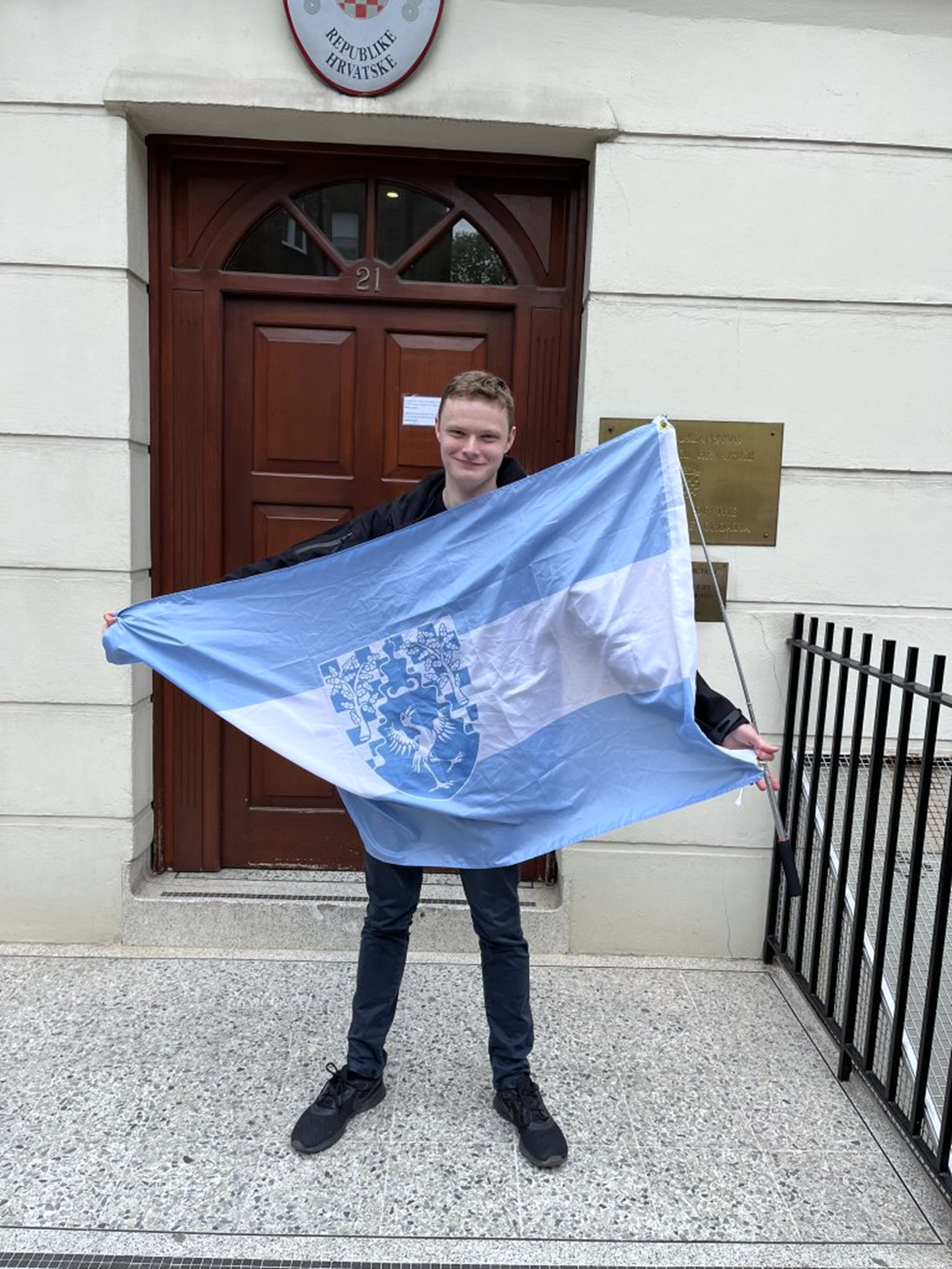
In an era where starting a business or launching a social media brand is the most common dream for young innovators, Daniel Jackson, a 20-year-old British-Australian digital designer, decided to go one step further — he founded his own country.
Known as the Free Republic of Verdis, this micronation sits on a 0.5-square-kilometre (125-acre) forested patch of land along the Danube River, wedged between Croatia and Serbia. Due to an unresolved border dispute, neither country claims the land — making it a legal grey zone and the perfect stage for Jackson’s unusual experiment in nation-building.
Jackson’s idea for Verdis first emerged when he was just 14 years old. What began as a lighthearted experiment with friends turned into a full-fledged project by the time he was 18. In May 2019, he officially declared the independence of the Free Republic of Verdis, complete with a flag, a cabinet, a constitution, and its own currency.
The nation’s official languages are English, Croatian, and Serbian, and the Euro is used as its currency. Access to Verdis is only possible by boat from the Croatian city of Osijek, a factor that has both romanticized and complicated its existence.
Initially, Verdis had only four members. Today, it boasts over 400 official citizens selected from more than 15,000 applicants worldwide. Citizenship comes with a Verdisian passport, though Jackson warns that it’s largely symbolic and not officially recognized for international travel — despite anecdotal reports of it being accepted in certain instances.
When approving citizenship, Jackson and his team prioritize applicants with useful skills such as medical training or law enforcement experience, ensuring the microstate has a diverse talent pool.
Verdis occupies a territory nicknamed “Pocket Three” on maps — a picturesque strip of land along the Danube, rich with forest and nature. Jackson describes it as “magical” to stand on land you’ve claimed as your own country.
But the journey hasn’t been without challenges. In October 2023, Croatian police detained and deported Jackson and several settlers, issuing him a lifetime ban from entering Croatia. Authorities cited concerns over “homeland security” but provided no detailed explanation.
Jackson now operates what he calls a “government in exile”, claiming Croatian authorities have even installed surveillance equipment along Verdis’ shoreline to block access from Serbia. Despite tensions, he maintains that Verdis seeks a peaceful relationship with both neighboring countries.
While Verdis remains unrecognized by any government and falls into the growing category of symbolic micronations, Jackson insists this is more than a publicity stunt.
“If successful, I would step down and hold democratic elections,” he says. “I’m not interested in power — I just want to be a normal citizen.”
He remains optimistic about returning to Verdis, believing it’s a matter of “when, not if,” and argues that Croatia’s lack of a formal claim strengthens his case.

The Free Republic of Verdis joins a long list of self-declared micronations — from Vatican City (an actual sovereign state) to quirky hobbyist states that exist mostly online. However, Verdis stands out due to its location in a politically sensitive, real-world no-man’s land and its growing community of dedicated citizens.
Whether it ultimately gains recognition or remains a passionate experiment, Verdis reflects the human desire for freedom, creativity, and self-determination. For Daniel Jackson, it’s not about ruling — it’s about building something extraordinary from a teenage dream.
In his own words: “To the naked eye, it is just a lot of forest. But when you realize that you are in a country you have created, it is magical.”